
New records of localities of terrestrial heteropters in western Cuba
Article Sidebar
Main Article Content
Abstract
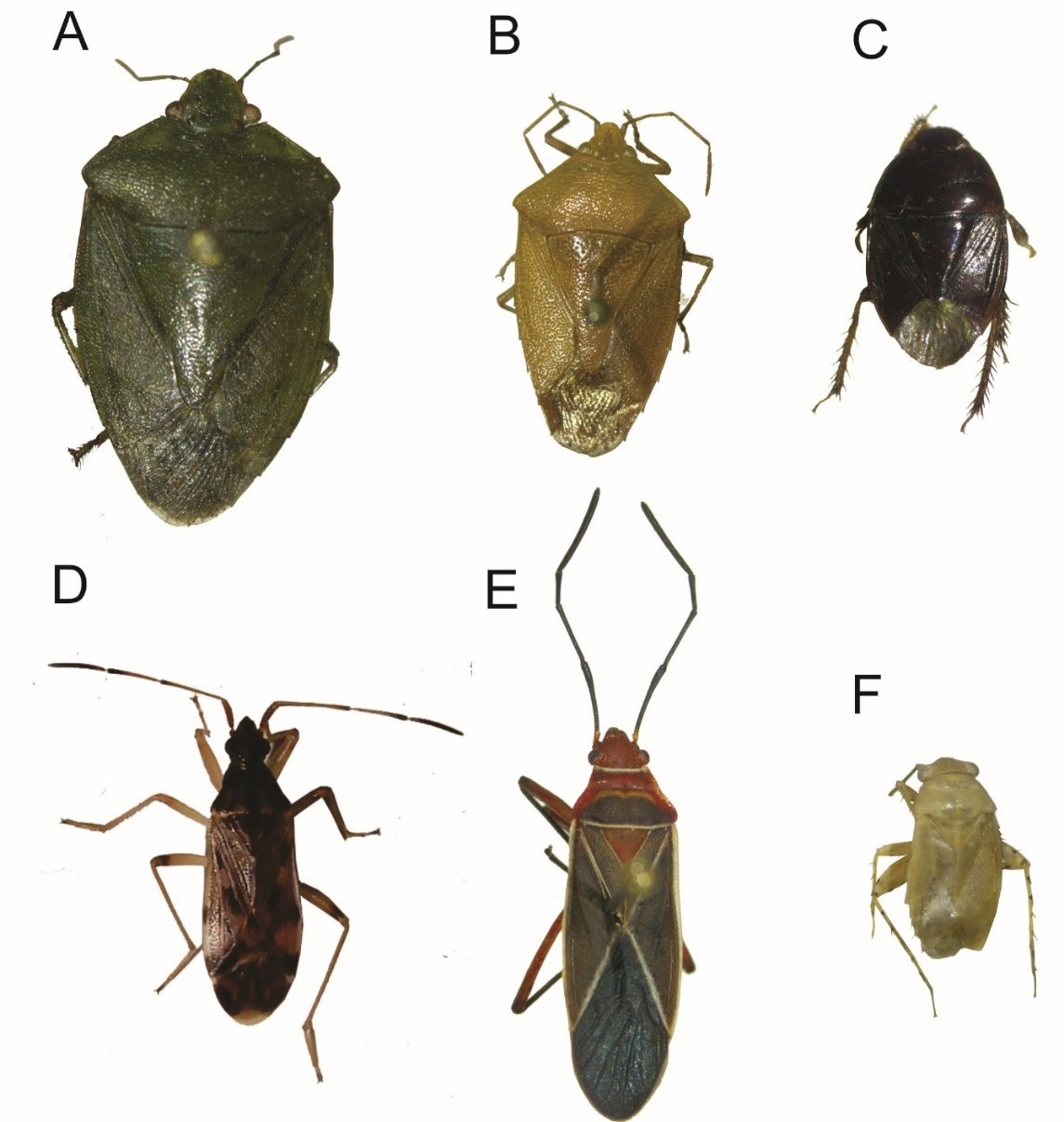
In the western region of Cuba there are several sites that are a priority for their conservation, mainly due to their high species richness. Among the most diverse groups of these sites, the heteropterans stand out, with multiple functions in the different ecosystems, so their study is essential. The purpose of this work is to provide a list of terrestrial heteropterans in different vegetal formations in western Cuba. The study was carried out in 10 localities, during the rainy season (May to October) of 2015 and 2016. Five representative vegetal formations from this region were sampled. For the collection, a light trap with a 250 watt and 220-volt mercury vapor bulb was used; projecting the light on a white sheet. The collections were carried out during two nights (two subsamples) from 20:00 to 23:00 hours. New records of localities are reported for 55 species of heteroptera in western Cuba. 15 families were identified, of which Rhyparochromidae with 13 species, Pentatomidae with 11 and Miridae with 9 were the best represented. The families Rhyparochromidae and Pentatomidae were found in all localities, while Berytidae and Geocoridae were only recorded for Lomas de Canasí. The species with the highest representativeness by localities were: Ozophora atropicta and O. pallescens (Rhyparochromidae) in ten and seven, respectively; Reuteroscopus hamatus (Miridae), Dysdercus andreae and D. suturellus (Pyrrhocoridae), in six.
Article Details
Section
Los resultados publicados en la revista Poeyana se presentan bajo la Creative Commons Attribution License, que permite a cualquier lector hacer un uso libre de estos mientras refiera la fuente. No debe, por tanto, incluirse ningún material que no pueda ser publicado bajo estos términos, por ejemplo, fotografías con Copyright. Todos los datos o materiales extraídos de un trabajo escrito por otra persona, se deben identificar con claridad y atribuirse a sus autores, aunque no se hayan publicado o no se hayan citado palabra por palabra.